Small Win, Big Mistake: How a Little Luck Can Trick You Into Betting Way More Than You Should
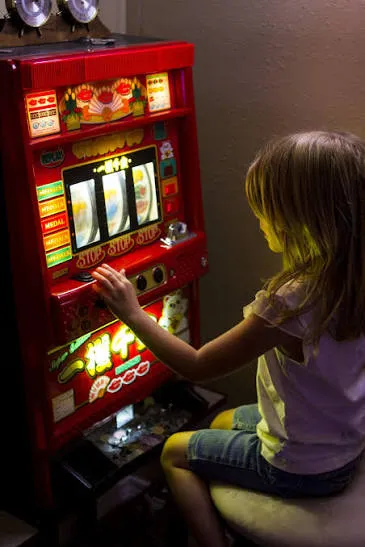
Photo: Holly Chaffin, CC0, via Wikimedia Commons
You're cruising along at $0.50 a spin, playing it cool, sticking to the plan. Then it happens — a modest little win drops, maybe $4 or $8, nothing earth-shattering. But something shifts. Suddenly $0.50 feels too small. You bump it to $1.50. Maybe $2. The reels feel warmer somehow. The game feels alive.
Congratulations. You've just walked into one of the most reliable psychological traps in casino gaming — and the house was counting on it.
What Psychologists Call the "Threshold Effect"
The phenomenon has a few names in behavioral science circles — some researchers call it the "house money effect," others refer to it as post-win escalation. But whatever the label, the pattern is remarkably consistent: after a small win, a significant portion of players increase their bet size in a way that has nothing to do with rational strategy and everything to do with emotion.
Here's the basic mechanics. When you win — even a little — your brain releases a small burst of dopamine, the same neurotransmitter tied to pleasure, motivation, and reward-seeking. That neurochemical hit doesn't just feel good. It subtly recalibrates your risk tolerance. What felt like a "big bet" thirty seconds ago now feels totally reasonable. You've crossed an internal threshold, and the new landscape looks a lot more permissive.
Gaming psychologists describe this as a momentum illusion — your brain has constructed a story where the game is "running hot," where you're in some kind of groove, and where increasing your stake is the logical move. None of that is true. The slot machine has no memory. The RNG doesn't care what just happened. But your brain cares deeply, and it's writing a very convincing fiction.
The Neuroscience of "Being on a Roll"
There's a reason this illusion is so hard to shake even when you know it's an illusion. The prefrontal cortex — the part of your brain responsible for rational decision-making — gets partially overridden when the limbic system (your emotional core) gets activated. A win activates the limbic system. Hard.
Research in behavioral economics, including work building on Daniel Kahneman's foundational studies on cognitive bias, shows that people in a "gain frame" — meaning they feel like they're ahead — take on more risk than they would in a neutral state. That $4 win didn't just add $4 to your balance. It shifted your entire psychological frame. You're no longer playing defensively. You're playing like someone who has momentum.
The cruel irony? Momentum doesn't exist in slot gaming. Every spin is statistically independent. The machine that just paid you $8 is no more likely to pay you again than it was before that win. But try telling that to a limbic system running hot on dopamine.
How Slot Design Deliberately Amplifies This
Here's where things get really interesting — and a little uncomfortable. Slot developers are not unaware of this psychological pattern. They've built entire game mechanics around it.
Consider the near-miss feature, where two jackpot symbols land and the third stops just one position away. Or the cascading win mechanic, where a modest payout triggers a visual celebration so elaborate it feels like a major event. Or the way modern slots use escalating sound design — the audio pitch rises slightly with each consecutive win, even small ones, creating an auditory illusion of building momentum.
These aren't accidents. They're deliberate amplifiers of the threshold effect. The goal is to get you across that internal line — the one where you start thinking "I should be betting bigger right now" — as quickly and as often as possible.
Some games even structure their bonus rounds to deliver a series of small wins in rapid succession before the big payout moment. By the time you hit the actual jackpot, you've already bumped your base bet twice, meaning the house has extracted more from your bankroll during the "buildup" phase than most players ever calculate.
Real Betting Patterns: What the Data Looks Like
If you've ever tracked your session play — and honestly, more players should — the pattern tends to show up clearly. Players rarely increase their bets after a cold streak. They increase them after wins. And they tend to increase them in proportion to how emotionally satisfying the win felt, not necessarily how large it actually was.
A $10 win delivered with flashing lights, a musical fanfare, and animated screen effects will trigger more post-win escalation than a quiet $15 credit addition with no celebration. The experience of winning matters as much as the amount — sometimes more. That's a design choice, not a coincidence.
The practical result? Players who started a session with a disciplined $0.25 per spin budget frequently end sessions having spent stretches at $2 or $3 per spin — not because they planned to, but because a series of small wins gradually escalated their sense of what was "normal" to bet.
How to Recognize It Before It Costs You
The good news is that awareness genuinely helps here. Knowing the mechanism doesn't make you immune, but it does give you a fighting chance. A few things to keep in your back pocket:
Set your bet size before you start — and treat it as non-negotiable. This is the most effective single countermeasure. If you've decided on $0.50 a spin, that decision should be made when you're calm and thinking clearly, not in the middle of a session when your dopamine is spiking.
Notice when you want to bump your bet after a win. That impulse is real and it's going to happen. The goal isn't to eliminate it — it's to pause and recognize it for what it is: a neurochemical reaction, not a strategic insight.
Use the "cold water test." Before increasing your bet after a win, ask yourself: if I'd just lost $4 instead of winning $4, would I be thinking about raising my bet right now? The answer is almost certainly no. That asymmetry tells you something important about what's actually driving the decision.
Track your session in real time. Keep a simple note on your phone — what you started with, what you're betting, what's happened. Externalizing the data takes some power away from the emotional narrative your brain is constructing.
The Bottom Line
Small wins feel good. They're supposed to. That's the whole point. But the real cost of the threshold effect isn't the single big bet you make right after a payout — it's the cumulative drift upward that can quietly double or triple your effective spend per session without you ever making a conscious decision to do so.
The house isn't cheating. The math is all above board. But the psychological architecture of modern slot gaming is specifically designed to make rational bankroll management feel unnatural in the heat of the moment. Understanding that design is the first step toward playing on your own terms — not the terms the game was built to nudge you toward.
Spin smart. And the next time a little win hits and you feel the urge to go bigger? Take a breath. The machine doesn't know you're on a roll. Only your brain thinks that — and your brain, in that moment, is not entirely your friend.